 BHUTAN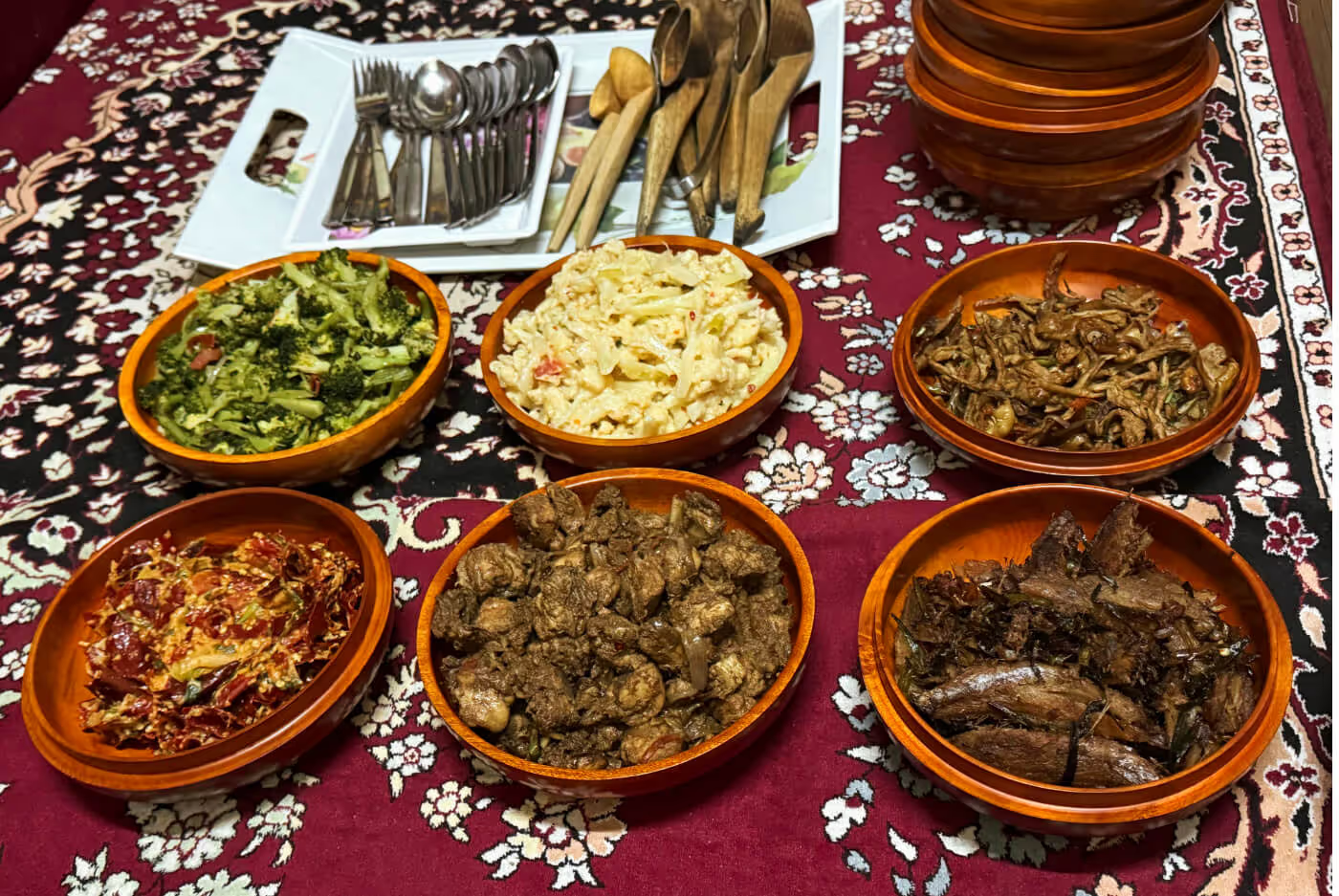
A place at the table
There is a point in a journey when the next landmark can wait. Lunch arrives, someone explains what is in the bowl, and a conversation begins. These are the moments we make room for when planning meals in Bhutan.
A good table need not be elaborate. It might be a family kitchen, a small restaurant close to your afternoon walk, or a quiet dinner at your lodge. What matters is the food, the welcome and whether the meal suits the day.
↑ Back to contentsBhutanese dishes to begin with
You do not need to learn a whole menu before you arrive. These few names give you a useful starting point:
- Ema datshi: chillies cooked with cheese, with recipes varying between kitchens.
- Kewa datshi: potatoes and cheese; ask about the chilli before assuming it is mild.
- Shamu datshi: mushrooms cooked with cheese.
- Momos: dumplings with different fillings, often served with a chilli accompaniment.
- Puta: buckwheat noodles associated with Bumthang.
- Hoentay: buckwheat dumplings associated with Haa, with fillings that can include greens and cheese.
The Trans Bhutan Trail’s food guide describes these dishes and their variations. Think of them as things to ask about, rather than a fixed menu promised at every stop.
↑ Back to contentsIf you prefer less chilli
Tell us before the journey, and remind your guide as you settle in. “A little spicy” means different things to different people. It is more helpful to say whether you enjoy gentle warmth, need dishes without added chilli, or prefer to try a small portion alongside something mild.
We can request simpler preparations and ask for chilli accompaniments separately where the kitchen can accommodate this. A dish already cooked for a shared meal may not be possible to change. Planning ahead gives the host more choices and you a more comfortable lunch.
↑ Back to contentsFarmhouse meals, with time to linger
The appeal of a farmhouse meal is the chance to spend time with the people preparing it. You may see ingredients being sorted, help with a small task when invited, or simply sit down and talk through your guide. Cooking together should feel welcome to both guest and host.
Raven arranges these visits around household availability and your interests. A family home is also someone’s working and private space: ask before photographing people, entering another room or joining the cooking. Some hosts enjoy a hands-on visit; others prefer to share a meal they have prepared.
Allow an unhurried part of the day for it. Browse our Signature Experiences for ways food and local encounters can fit into a private journey.
↑ Back to contentsWhy variety matters
Several days of similar lunches can make even a lovely itinerary feel repetitive. We prefer a balance: a local table when there is time to enjoy it, a straightforward meal after a demanding walk, and a comfortable hotel dinner when an early night sounds best.
Buffets have their place, especially for breakfast, groups or days with a tight schedule. The question is whether that meal works for you. There is room for familiar food and a café stop as well as Bhutanese dishes. Curiosity should feel enjoyable, never like a test.
↑ Back to contentsVegetarian, vegan and other dietary needs
Tell us precisely what you eat and what you avoid before we choose the meal stops. Vegetarian and vegan requests need different planning: a vegetable dish may contain cheese or butter, while a soup or sauce needs its ingredients checked separately.
For allergies or strict exclusions, share the specific ingredients and the level of kitchen separation you require. We will check what the proposed kitchens can realistically provide. We cannot promise an allergen-free environment in every household or restaurant; if a setting cannot meet your needs, we should choose another arrangement.
For family travel, it also helps to know which familiar meals your children enjoy and when they normally eat. Small details like these can be more useful than a long list of restaurants.
↑ Back to contentsLet the valleys change the menu
Food is another reason to travel with a little breathing room. Ask what is being grown nearby, which ingredients are seasonal, or whether a household speciality can be arranged. Let the answer guide the meal instead of expecting the same dishes everywhere.
Bhutan’s food culture is also changing. In research based on fieldwork in Haa, anthropologist Elena Neri describes households balancing buckwheat traditions with imported foods and changing livelihoods. Her account of rural food systems offers a thoughtful reminder that a living kitchen does not stand still.
For Raven, that means approaching hosts with curiosity. We do not assume every ingredient is locally grown or organic simply because a meal is served in a village.
↑ Back to contentsWhat to tell Raven before you travel
- Your preferred spice level and any ingredients you must avoid.
- Whether you would enjoy cooking, a hosted meal, a market visit or simply good restaurants.
- How often you would like familiar food between local meals.
- Any particular dish or valley tradition you hope to explore.
- Whether a special dinner is part of the occasion you are celebrating.
Ask us to explain which meals, drinks and special arrangements are included in your proposal. A farmhouse lunch or private outdoor meal should be agreed in advance, including any extra cost. Outdoor settings also need a practical alternative if the weather changes.
Your accommodation affects evenings too. Our guide to choosing the right Bhutan stay explains why location and the rhythm of your route matter.
↑ Back to contentsThe meal that belongs to your day
After a long hike, a hot meal close to your room may be exactly right. On a slower day, lunch can become the afternoon’s main pleasure. We build that flexibility into the conversation about your trip, then confirm what is possible along the route.
Start with our recommended journeys, or tell us how you like to travel and eat. You do not need to turn your holiday into a food tour to come home remembering a particular table.
↑ Back to contentsSources & further reading
Trans Bhutan Trail — Food & Drink in Bhutan. Reference for the dishes introduced above.
Elena Neri — From buckwheat to white rice, Leiden Anthropology Blog, 7 April 2026. Research perspective based on fieldwork in Haa during 2024–2025.
Reviewed September 2026. Meal planning advice reflects Raven’s approach; menus, hosts and special arrangements are confirmed for each journey.
↑ Back to contents