 BHUTAN
There is no single best time to visit Bhutan. The right season depends on what you hope to feel and do: walk beneath flowering forests, cross a high mountain pass, experience a living festival, photograph clear Himalayan horizons, watch black-necked cranes or simply travel when the valleys feel quieter.
Bhutan is often reduced to two “best” seasons—spring and autumn. They are beautiful, but that simple answer can push every traveller towards the same months, even when another time would suit the journey better. Raven begins with your interests, preferred pace and tolerance for weather, then chooses the season around them.
This guide offers an honest starting point. Mountain conditions vary by valley and elevation, festival dates can change, and no forecast can guarantee a particular view. Yet each part of the year has a distinct character worth understanding.
Bhutan’s seasons at a glance
- Spring, generally March to May: flowering forests, pleasant walking temperatures and lively cultural travel.
- Summer, generally June to August: vivid green valleys, fewer visitors, warm conditions and regular monsoon rain.
- Autumn, generally September to November: clearer mountain light, major festivals and strong trekking conditions.
- Winter, generally December to February: crisp days, quieter western valleys and seasonal birdlife, with colder nights and snow possible at altitude.
These are broad patterns rather than rigid borders. Bhutan’s elevation changes quickly, so Paro, Punakha, Phobjikha, Bumthang and the subtropical south can feel very different on the same day. Before and during every journey, Raven follows forecasts from Bhutan’s National Center for Hydrology and Meteorology and adapts practical plans when conditions require it.
↑ Back to contentsSpring: flowers, gentle warmth and an awakening landscape
Spring suits travellers who want nature and culture in balanced measure. Days become warmer, agricultural life gathers momentum and forests can brighten with rhododendrons, magnolias and other blossoms. The exact timing varies with elevation and the year’s weather, so flowering should be treated as a possibility rather than a promise attached to a particular date.
March often begins cool, especially in the mornings and at higher elevations. April is widely appealing for walking and cultural touring, while May can feel warmer and more humid as summer approaches. Spring works well for first-time visitors who want Paro, Thimphu and Punakha, with the possibility of extending into Phobjikha or Bumthang.
It is also a rewarding season for private day hikes. Trails may lead through forest rather than across exposed high country, giving guests time to notice changing vegetation, village life and the quieter spaces between landmark visits.
Spring may suit you if: you value flowering landscapes, comfortable walking, cultural encounters and a journey that feels naturally varied.
Keep in mind: cloud and afternoon showers are possible, popular festival periods can be busy, and the highest trekking routes may still hold snow.
↑ Back to contents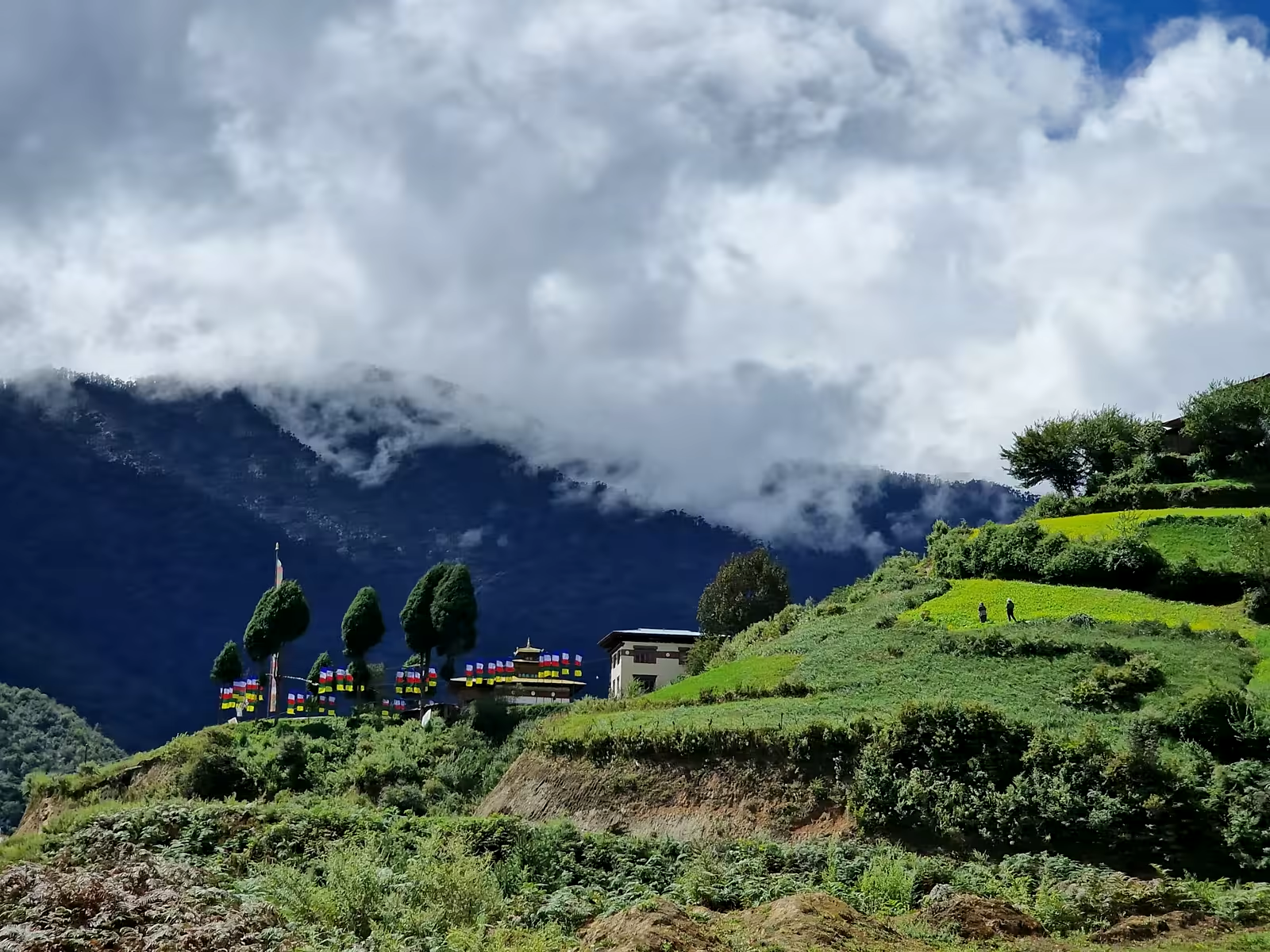
Summer: green valleys, intimate journeys and the rhythm of rain
Bhutan’s summer is the least understood season. The monsoon brings rain, cloud, warmer temperatures and occasional disruption, yet it also transforms the valleys. Rice fields become intensely green, waterfalls return to the mountainsides and farming communities move through one of their most active times of year.
Rain rarely follows a perfect timetable. Some days bring short, forceful showers; others remain cloudy or wet for longer. Roads can be affected by slips, flights may face weather delays and distant Himalayan views are less reliable. A summer itinerary therefore needs breathing room and sensible expectations.
For the right traveller, however, summer can feel wonderfully personal. Cultural sites and hotels are generally quieter, the countryside feels alive and the soft light can be beautiful for close, atmospheric photography. Raven favours flexible western-Bhutan routes during this period, with fewer hotel changes and enough time to respond calmly if weather alters the day.
Summer may suit you if: you prefer fewer visitors, green scenery, farming life and a slower journey that does not depend on uninterrupted mountain views.
Keep in mind: rain protection, suitable footwear and itinerary flexibility matter. Summer is not our first recommendation for a demanding high-altitude trek.
↑ Back to contentsAutumn: clear light, festivals and classic trekking conditions
Autumn is popular for good reason. As the monsoon withdraws, skies often become clearer, temperatures settle and mountain visibility tends to improve. Fields turn gold before harvest, and many important religious festivals take place across the country.
September is transitional and can still carry some rain. October often brings sought-after trekking and touring conditions. November is usually cooler and can feel especially crisp, with increasingly cold nights at elevation.
This is a strong season for travellers whose priorities include Himalayan scenery, multi-day trekking, photography or a festival-led journey. It is also one of the busiest periods, particularly around well-known tshechus and limited premium accommodation. Early planning helps, but Raven does not build a route around availability alone. We protect the pacing and recommend alternatives when a famous date would make the journey unnecessarily crowded or rushed.
Autumn may suit you if: clear mountain light, trekking and major festivals sit at the heart of your journey.
Keep in mind: demand is higher, evenings become cold and a festival should be experienced with cultural context—not squeezed into an ordinary sightseeing day.
↑ Back to contentsWinter: quiet valleys, clear mornings and a more reflective Bhutan
Winter can be one of Bhutan’s most rewarding seasons for travellers who do not mind cold mornings and evenings. Western valleys often receive bright, dry daytime weather, while visitor numbers ease after the autumn rush. Punakha and the subtropical south remain milder than Paro, Thimphu, Phobjikha and Bumthang.
At higher elevations, snow and ice can close passes or alter walking plans. Rooms without strong heating may feel uncomfortable, so thoughtful accommodation selection matters. With the right route, winter offers peaceful monasteries, unhurried cultural visits and sharp, beautiful light.
It is also the season associated with black-necked cranes in Bhutan. The birds migrate to wintering valleys including Phobjikha, although sightings and exact arrival or departure timing remain natural events rather than guaranteed appointments. The Royal Society for Protection of Nature is an authoritative source for Bhutan’s crane conservation work.
Winter may suit you if: you appreciate quieter travel, birdlife, crisp photography and a journey shaped around lower valleys and cultural depth.
Keep in mind: nights can be very cold, snow may affect high roads and treks, and shorter daylight hours call for realistic scheduling.
↑ Back to contentsWhen should a first-time visitor come?
For a first journey, April, October and November are often appealing because they can balance walking, cultural exploration and comfortable travel. But they are not automatically the best choice for everyone.
A guest who dislikes crowds may prefer late March, May, early December or another quieter period. Someone more interested in village life than distant mountain views may find summer deeply rewarding. A birdwatcher may deliberately choose winter. A festival traveller must begin with confirmed dates rather than a generic seasonal recommendation.
The better question is not simply “Which month has the best weather?” It is “Which conditions support the journey I want?” Raven’s private Bhutan journeys are starting points, and we adjust their route, pace and emphasis to the season.
↑ Back to contentsBest time for trekking and private hiking
For many established high-altitude treks, spring and autumn provide the broadest windows. Autumn often offers clearer visibility; spring brings flowering forests and a sense of renewal. Conditions still vary by trail, altitude, snowfall and recent weather.
Not every active journey needs to be a high trek. Bhutan has excellent day hikes and lower routes that can work across a wider part of the year. A guest may walk to a monastery in the morning, return to a comfortable lodge and keep the following day flexible. This approach suits travellers who want immersion and movement without camping or crossing high passes.
Raven considers acclimatisation, trail condition, daylight, recovery time and the real fitness of each guest. We would rather shorten a day or change a route than protect an itinerary description at the expense of the traveller.
↑ Back to contentsBest time for festivals
Bhutanese tshechus and other religious gatherings follow local and lunar calendars. Dates and programmes can shift, so a journey should be built only after the relevant festival has been checked carefully.
Spring and autumn contain many of the country’s best-known events, but smaller regional festivals can provide a more intimate experience. The most famous is not necessarily the most meaningful for every guest. Location, crowd levels, photography etiquette, seating, road access and the surrounding route all matter.
Read what a Bhutan festival feels like beyond the masked dances before deciding whether a festival should anchor your journey.
↑ Back to contentsBest time for photography
Autumn and winter generally offer the greatest chance of clear mountain horizons, while spring can bring flowers, softer colour and lively rural scenes. Summer creates a different visual language: saturated greens, mist, cloud and intimate views rather than distant peaks.
Photography in Bhutan improves when the itinerary respects light and time. An early monastery visit, an unhurried village walk or waiting quietly for cloud to move can matter more than adding another location. Raven designs photographic opportunities around real places and daily life, without staging sacred rituals or treating people as scenery.
↑ Back to contentsBest time for birding and nature
Birding depends on habitat, elevation and target species, not simply on one nationwide “best month.” Spring is rich for forest activity and migration, while winter draws travellers interested in black-necked cranes and lower-elevation birding. The subtropical south and eastern forests follow different conditions from the western cultural valleys.
A serious birding itinerary needs specialist guiding, early starts and route choices that protect time in the field. For a general nature lover, birding can be woven more gently into walks, riverside stops and quieter lodge stays.
↑ Back to contentsBest time for wellness and slow travel
Wellbeing does not belong to one season. Winter invites stillness and quieter properties. Spring encourages movement outdoors. Summer offers green landscapes and fewer visitors, while autumn can combine walking with restorative hotel time.
The quality of a wellness journey depends more on rhythm than temperature: fewer hotel changes, realistic drives, a room worth returning to and enough open space for yoga, meditation, a traditional hot-stone bath or simple rest. Our guide to wellness in Bhutan explores these possibilities in greater depth.
↑ Back to contentsWhat the weather tables cannot tell you
Monthly averages are useful, but Bhutan is a mountain country. A sunny morning can become cloudy by afternoon. A pass may receive snow while a lower valley remains mild. A flight may operate normally one day and wait for visibility the next.
Pack layers rather than relying on one seasonal label. Bring rain protection even outside summer, sun protection throughout the year and warmer clothing whenever the route reaches altitude. Raven provides journey-specific guidance once the itinerary, accommodation and activities are known.
Most importantly, leave some flexibility. Weather is not a failure of the journey. It is part of travelling through a living Himalayan landscape.
↑ Back to contentsRaven’s honest recommendation
If your dates are flexible, tell us what matters most before choosing a month. If your dates are fixed, tell us those dates before choosing a route. Both approaches can lead to a beautiful journey.
We will explain the likely conditions, select valleys that fit the season and avoid promising flowers, festivals, wildlife or mountain views that nature may not provide on command. We may recommend an extra night, a gentler walk, a warmer property or a different region because those small decisions often shape the quality of the whole experience.
Explore Raven’s Signature Experiences and our approach to choosing where to stay. Then begin a private conversation with Raven. Tell us how you hope Bhutan will feel, and we will help you choose not only when to come, but how to travel well when you do.
↑ Back to contents