 BHUTAN
A Bhutan festival is not simply a performance. It is a living religious and social gathering where prayer, family, textiles, food, conversation and long stretches of waiting all share the same courtyard. The masked dances may be the most recognisable part, but the feeling of the day comes from everything happening around them.
For a visitor, the experience can be joyful, intense and occasionally tiring. There may be drums and horns, brilliant colour, incense, children weaving through the crowd and families settling in for several hours. There may also be sun, rain, limited seating and moments when very little appears to happen. Entering that rhythm patiently is what turns a festival from a photograph into an encounter.
What is a tshechu?
A tshechu is a Buddhist religious festival traditionally associated with the tenth day of a lunar month. Many honour Guru Rinpoche, who helped establish Buddhism in Bhutan, and include sacred masked dances known as cham. The dances carry religious meaning; they are not staged only as entertainment for visitors.
Monks or trained lay performers may embody protective deities, teachers, animals or figures from Buddhist teachings. Music, movement, costumes and masks work together as a form of spiritual instruction and blessing. Your guide can help explain the broad meaning without interrupting the ceremony or pretending that every detail has a simple translation.
Not every public celebration in Bhutan is a tshechu. Seasonal and community events—such as festivals connected with black-necked cranes, mushrooms, local food or regional traditions—can have a different purpose and atmosphere. This distinction matters when choosing a festival: two events listed on a calendar may offer very different experiences.
↑ Back to contents
What does a festival day actually feel like?
The day often begins before the main programme. Roads and footpaths become busier as families arrive in their finest gho and kira. People greet relatives, arrange cushions and food, circle the courtyard and look for a place from which grandparents and children can see comfortably.
The programme may unfold in sequences rather than as a continuous show. A dance begins, pauses and gives way to another ritual. Monks move between duties. Friends talk quietly. Families share snacks or a packed lunch. Children become fascinated, restless and fascinated again.
This social layer is not a distraction from the festival. It is part of the festival. A tshechu is one of the occasions when communities gather across generations, renew connections and take part in a shared religious life.
↑ Back to contents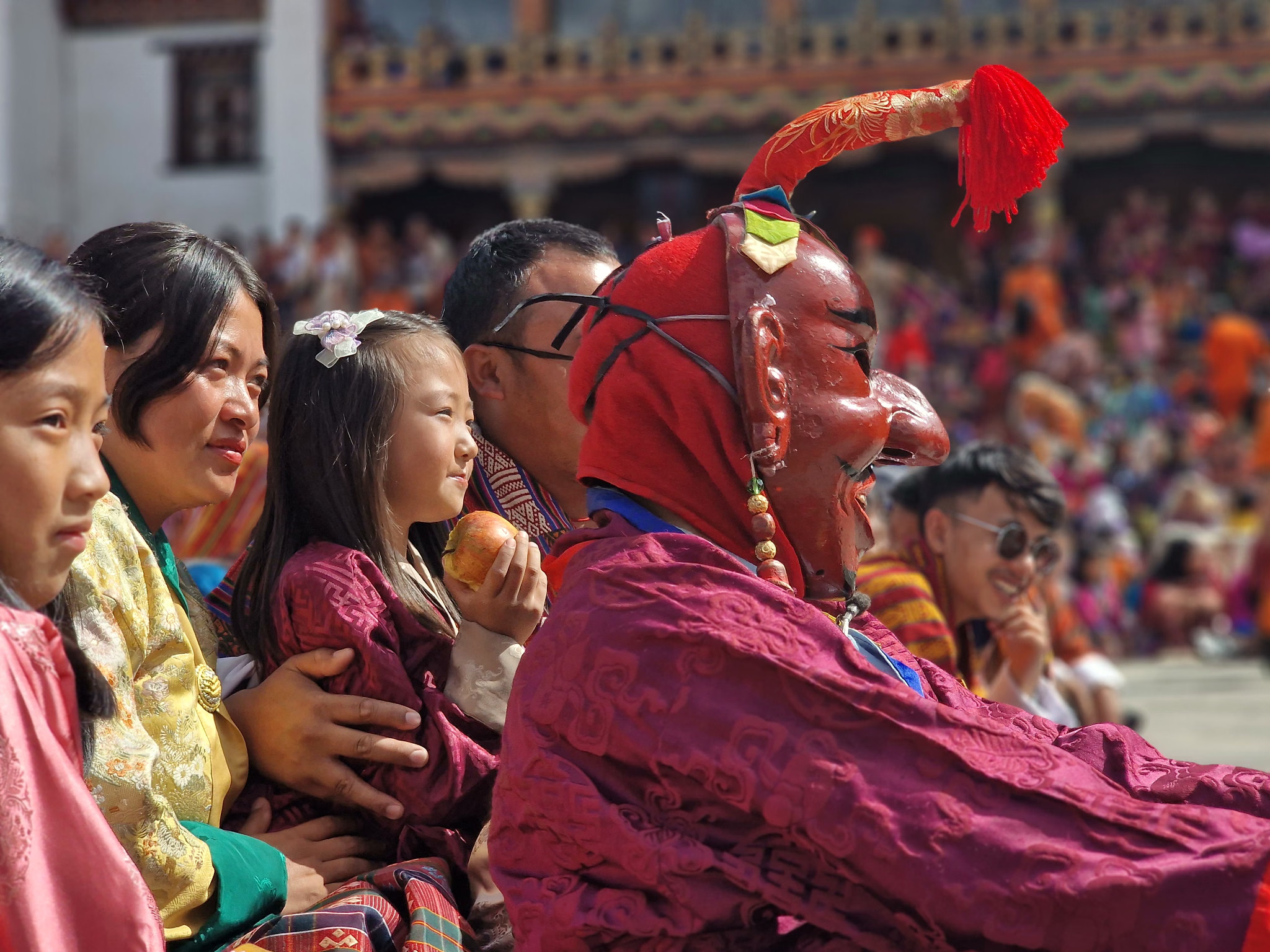
Large festivals and smaller regional gatherings
Paro and Thimphu host some of Bhutan’s best-known tshechus. They can be magnificent: large courtyards, important rituals, accomplished performers and an extraordinary concentration of colour. They can also be crowded, and accommodation in the surrounding valley may fill well in advance.
A smaller regional festival may feel more intimate. Visitor numbers can be lower, the setting more rural and the relationship between performers and spectators easier to observe. “Smaller” does not mean less authentic or less important. It may simply be a community gathering with a different scale.
Neither is automatically better. A first-time visitor who enjoys energy and spectacle may love a major tshechu. A returning traveller, photographer or guest who dislikes dense crowds may be happier at a quieter event along a route that suits them.
↑ Back to contentsHow do you choose the right Bhutan festival?
Begin with the journey rather than choosing the most famous name. Consider:
- What interests you: sacred dance, Buddhist context, textiles, local social life, photography, food, nature or a seasonal tradition.
- How you feel about crowds: major events can be visually rewarding but physically busy.
- How much time you have: a festival should not force the rest of the itinerary into a rushed sequence of drives.
- Where it takes place: the surrounding valley, accommodation and route should also be worth your time.
- What the programme includes: different days of a multi-day festival can have different rituals and energy.
Raven’s festival and seasonal journeys are starting points rather than fixed departures. We match the event to the traveller and then shape the route around it.
↑ Back to contentsHow much time should you spend at a festival?
A brief visit can work, but arriving only for one expected photograph usually gives a thin impression of the day. Whenever possible, allow at least half a day and stay flexible. Some guests will happily remain for hours; others may absorb enough after a shorter period, especially in heat, rain or a tightly packed courtyard.
For a multi-day tshechu, attending on more than one day is optional. One carefully chosen day may be enough when the wider itinerary is short. A second visit can be rewarding for someone interested in ritual, textiles or photography, but it should earn its place rather than become an obligation.
Where you stay matters. Being nearby allows an earlier, calmer arrival and avoids ending an intense day with an unnecessary long drive. Raven’s approach to where we stay in Bhutan considers location and journey rhythm as carefully as hotel category.
↑ Back to contentsFestival etiquette: how to attend respectfully
A tshechu remains a religious occasion even when the atmosphere is festive. Your guide will advise you locally, but a few principles apply broadly:
- Dress modestly, with shoulders and knees covered. Remove hats at sacred sites and whenever your guide indicates.
- Do not walk through the performance space, block processions or stand between worshippers and a ritual.
- Keep your voice low during prayers and formal ceremonies.
- Ask before photographing individuals at close range, especially children, monks and people engaged in worship.
- Do not photograph inside temples or sacred interiors unless permission is clearly given.
- Follow instructions about shoes, seating and restricted areas without treating access as something to negotiate.
Bhutanese national dress is not required. Some guests enjoy wearing it when arranged thoughtfully, but it should never be treated as costume or a device for obtaining attention.
↑ Back to contentsPractical comfort: what to carry
Festival courtyards are not controlled theatre environments. Seating may be informal or limited, facilities can be simple, and weather can change during a long day. A small, well-prepared day bag makes the experience easier.
- Wear comfortable shoes that are easy to remove if you enter a temple.
- Bring layers, sun protection and a light rain jacket.
- Carry water and any personal medication you may need.
- Use a small cushion or folding seat only where appropriate and locally permitted.
- Keep camera equipment manageable; large bags and tripods can become intrusive in a crowd.
Your guide can advise on food, toilets, access and the best arrival time for the particular event. These details vary, so we prefer current local knowledge to generic promises.
↑ Back to contentsFestival dates can change
Festival dates follow religious and local calendars, and announced schedules can occasionally be revised. Weather, local decisions and other circumstances may also affect a programme. Raven reconfirms the date and practical arrangements before finalising the journey, while keeping sensible alternatives in mind.
This is especially important for international flights and limited accommodation. A good festival itinerary places you in the right valley with breathing room. It does not depend on an exhausting same-day dash across the country.
For wider advice on seasons, routes, flights and entry planning, see the Bhutan Travel Guide.
↑ Back to contentsPhotograph the whole story
Festival photography can be exceptional, but the most memorable images are not always close-ups of masks. Look at the arrival of families, the geometry of woven textiles, hands holding prayer beads, monks watching from a balcony, food passed between generations and the expression of a child seeing a dance for the first time.
Patience usually produces better photographs than constant movement. Choose a respectful position, notice how people use the space and let moments come to you. Sometimes the right decision is to lower the camera entirely.
If photography is a central interest, tell Raven in advance. We can consider crowd levels, light, access, the length of the day and a guide who understands your pace—without promising restricted areas or interrupting religious practice.
↑ Back to contents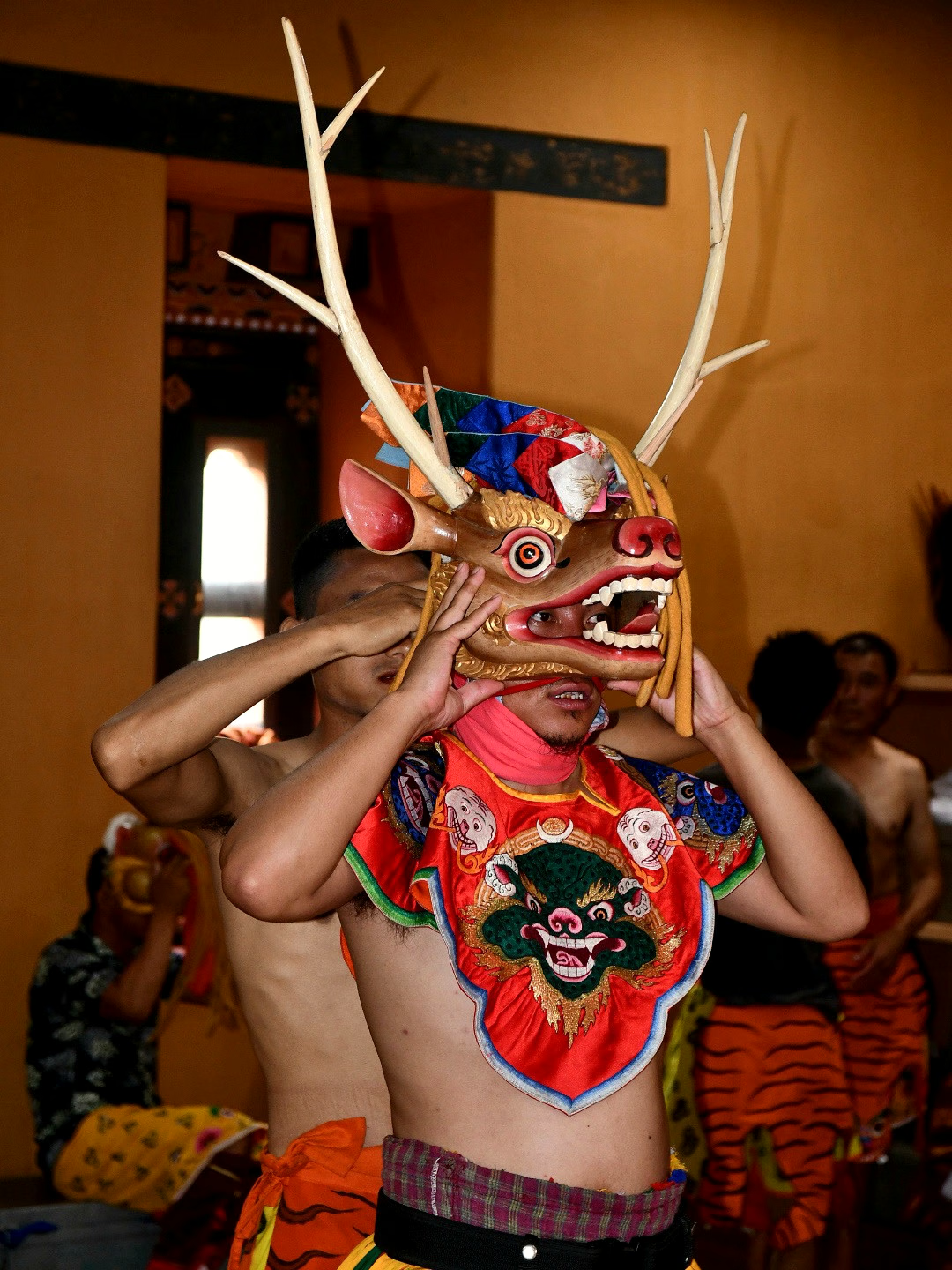
Build the journey around the festival—not through it
A festival should be a centre of gravity, not another activity squeezed between a long drive and hotel check-in. Raven normally protects time nearby and adds a quieter day before or after: a valley walk, a farmhouse meal, monastery time, restorative spa treatment or an unhurried afternoon at the property.
These contrasts help the journey breathe. After the sound and movement of a tshechu, a simple walk or private meal can feel especially meaningful. Our Signature Experiences show the kinds of encounters that can complement a festival without competing with it.
↑ Back to contentsRaven’s honest recommendation
Attend a Bhutan festival if the event genuinely interests you—not because every itinerary says you must. Choose the festival whose scale, setting and meaning fit you. Give it enough time, accept a little unpredictability and arrive ready to observe more than the dances.
Tell us when you hope to travel, how you feel about crowds and what you would most like to understand. Begin a private conversation with Raven, and we will recommend a festival only when it strengthens the journey as a whole.
↑ Back to contents