 BHUTAN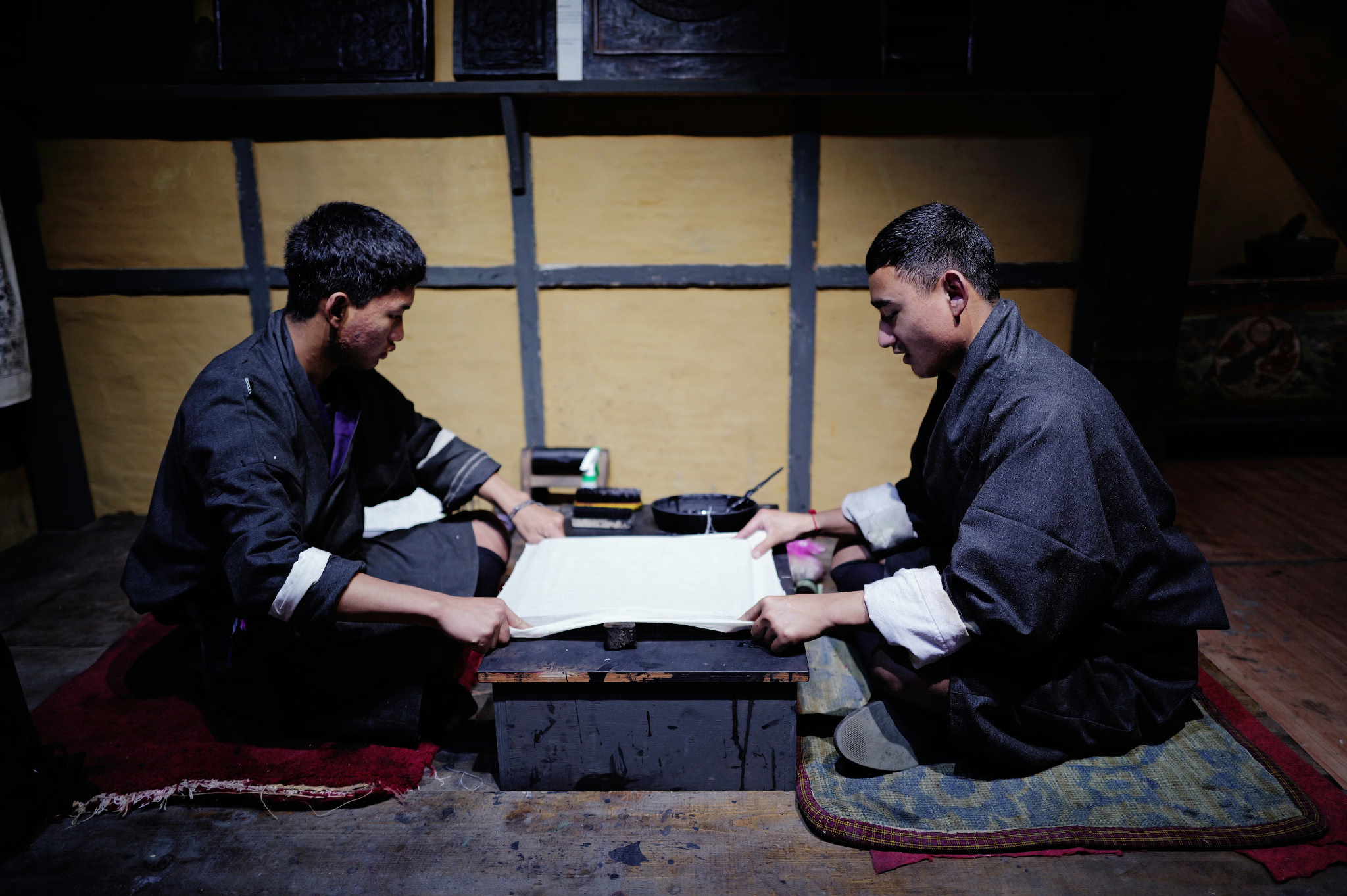
A monastery courtyard may be the photograph that brings you to Bhutan. Understanding the country begins when you look beyond its frame: at the people who care for that place, the lives they return to, and the choices their children will make.
Bhutanese culture rewards this wider attention. Faith, family, work and ambition belong to the same landscape. A meaningful cultural journey makes room for all of them.
For Raven, going beyond the postcard means approaching Bhutan as a home. We want guests to enjoy its beauty while meeting people as individuals, with their own humour, commitments and hopes. You need not arrive with expert knowledge. A little context and the willingness to listen go a long way.
A living country, not a journey back in time
Words such as “untouched” make an easy travel promise, but they leave little room for the people who actually live in a destination. Why should a young person’s ambitions, a comfortable house or a contemporary café make a place less worth visiting?
Bhutan’s own Department of Tourism introduction describes both urban and rural life, and places contemporary artists alongside inherited craft traditions. That is a useful starting point: modern culture belongs in a Bhutan journey too.
Give a town some time beyond its monuments. Ask your guide what they enjoy about living there. If art interests you, enquire about a gallery rather than assuming every cultural visit must involve an old building. A conversation about an artist’s choices can be as illuminating as an explanation of a historic mural.
↑ Back to contentsBuddhist heritage: understanding before participation
Bhutan’s 2008 Constitution recognises Buddhism as the country’s spiritual heritage and names the King as protector of all religions. This helps explain Buddhism’s public importance without implying that every Bhutanese person shares the same faith or practice. The constitutional text is available through Constitute’s Bhutan collection.
For a visitor, the most useful first question is often simple: what is happening here? Let your guide explain the purpose of a ritual before deciding whether to join it. A butter-lamp offering deserves that context, as does a prayer flag or a period of quiet sitting.
You can observe respectfully without becoming a participant. Follow the guidance of the people responsible for the space, ask before photographing, and accept that worship, study or privacy may limit access. A closed door does not make the encounter a disappointment; it reminds us that the place has responsibilities beyond tourism.
For those considering a longer experience, our article on staying in a Bhutanese monastery explains why permission, modest facilities and the community’s daily rhythm matter.
↑ Back to contents
Monarchy and democracy belong to the same story
Bhutan’s Constitution, adopted in 2008, establishes a democratic constitutional monarchy. The King is Head of State, while the constitutional system also provides for parliamentary government. Royal institutions and democratic institutions therefore belong within the same national framework.
Knowing this much helps a guest avoid reading Bhutan through an oversimplified image of a remote kingdom. It also creates room for better questions about history, public life and change.
Your guide can offer context, but no individual should be expected to speak for the whole country. Approach political or personal subjects with the same tact you would bring to a conversation at home. Curiosity works best when the other person has room to decide how much they wish to share.
↑ Back to contentsGross National Happiness is not a promise of constant happiness
Gross National Happiness, or GNH, is often reduced to a cheerful slogan. The research behind it is more substantial. The Centre for Bhutan Studies’ Short Guide to the GNH Index describes a multidimensional approach that considers health, education, living standards, psychological wellbeing, time use, community, culture, governance and the environment.
Its purpose includes identifying where conditions for wellbeing are insufficient. It does not claim that everyone feels happy all the time.
For a traveller, this is an invitation to replace “Are people here really happier?” with more thoughtful questions. What makes a good life? How do people balance work and family? What do they hope will improve? Listen without expecting an answer that confirms a travel story you already know.
↑ Back to contentsA younger generation deserves more than a supporting role
Bhutan’s official tourism narrative explicitly connects heritage with future opportunities for young people. Its statement on the country’s future places education, innovation and possibility alongside conservation.
That perspective should influence how we travel. When meeting a younger guide, maker or host, ask about their work and interests as well as inherited traditions. Allow their answers to surprise you. A person can value their culture and still want to change parts of their life.
Raven’s own family-run approach makes this especially meaningful. Our team includes women guides and office staff, and the people shaping a guest’s experience bring different skills and perspectives. Their role is professional as well as personal: they plan, interpret, solve problems and help a journey hold together.
↑ Back to contents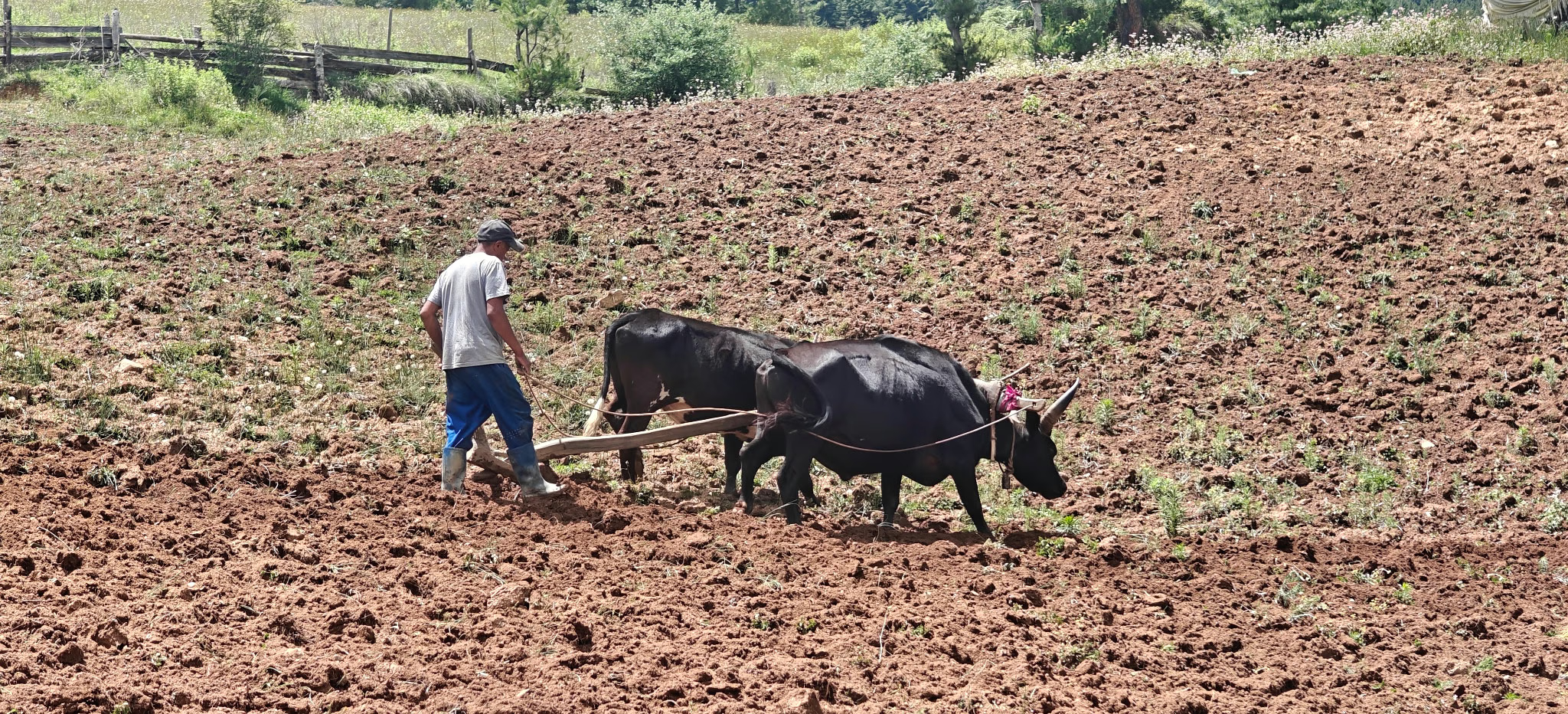
Culture becomes clearer when you give people time
You do not need an elaborate programme of “local encounters” to understand more. Choose a few experiences that match your interests and give each enough time.
- If you enjoy food: ask a host about an ingredient or preparation, with enough time to hear the answer.
- If you enjoy textiles or craft: discuss the work involved, then buy thoughtfully if something speaks to you. A workshop is also someone’s livelihood.
- If you enjoy spiritual history: linger at one appropriate site instead of collecting several brief visits.
- If you enjoy contemporary culture: include a gallery, café or conversation about the town you are staying in.
These are possibilities, not promised encounters. Hosts have work to do, people may prefer privacy, and some arrangements need advance notice. Our Signature Experiences provide a starting point for discussing what suits your journey.
↑ Back to contentsA practical way to shape a more thoughtful day
Consider building one day around a single substantial cultural visit, a well-chosen meal and an open afternoon. The morning provides historical context. Lunch offers a different kind of exchange. The afternoon leaves space for a walk, an additional conversation or rest.
This is a planning example, not a guaranteed sequence. Its value lies in the breathing room. Your guide can respond to what interests you without constantly watching the next departure time.
It also allows an experience to remain ordinary. You may enjoy a pleasant conversation without an extraordinary revelation. That is enough. Not every encounter needs to become a story about transformation.
↑ Back to contentsWhat to bring beyond your camera
Bring a willingness to ask permission, to pay fairly for people’s work and to reconsider a first impression. Avoid treating children, worshippers or families as photographic opportunities. If you would like a portrait, ask clearly and respect the answer.
Share your interests with Raven before you travel. Tell us whether you are drawn to contemporary art, family life, spiritual practice, food or history. We can then recommend relevant opportunities and explain what is genuinely available.
Bhutan’s famous places can still belong in that journey. Going beyond the postcard does not require rejecting the view. It means taking an interest in the lives around it.
Begin a private conversation with Raven, and let us shape a journey that gives your curiosity time to develop.
↑ Back to contents